
The New Wine Map: Emerging Wine Regions Reshaping Wine Travel in 2026
A friend who used to plan every September around a return to Chianti went to Georgia last year. She came back differently. She talked about a 78-year-old winemaker pouring her amber wine out of a clay vessel buried in his floor — the same vessel his father had used, and his grandfather before that. The wine tasted nothing like anything she'd had before. The tasting cost less than a glass of decent Chianti back home. "I'm going to need a few years," she said, "to catch up on the rest."
She isn't alone. The wine map most of us learned is being quietly redrawn. The travelers who care most about wine are moving first — toward Georgia, Moldova, the Greek islands, southern Italy, the Portuguese interior, and a handful of more improbable places. Not as alternatives to the famous regions, but as destinations worth the trip on their own terms.
If you've already done Bordeaux, Chianti, or Napa more than once, this is what comes next.
At a glance: emerging wine regions in 2026
In 2026, wine tourism is shifting toward emerging regions where serious travelers find authentic experiences at a fraction of the cost of classic destinations. Georgia leads with an 8,000-year qvevri winemaking tradition recognized by UNESCO. Moldova holds the world's largest underground cellars. The Greek islands produce distinctive volcanic wines from ancient grapes. Southern Italy's Etna and Aglianico, alongside Portugal's Dão and Alentejo, deliver quality at half the price of Tuscany or Bordeaux. The shared appeal across all these regions is the same: direct access to winemakers, deeper historical connections, smaller crowds, and an unhurried hospitality the famous regions can no longer offer.
Why is the wine map changing?
Three forces are doing most of the work, and they reinforce each other.
The first is saturation. Tasting fees in the classic regions have climbed steeply. Booking is harder. The estates that once invited you into the cellar now schedule you for the 11 a.m. slot with eleven other people.
The second is economics. Tariffs and shifts in European import costs through 2025 and 2026 have changed the math on US wine lists. Wines from Greece, Portugal's interior, and southern Italy are increasingly the smart-value picks. The regions producing them are getting attention they didn't have before. Recent industry research on wine tourism finds that nearly three-quarters of wineries plan to expand beyond tastings into broader experiences.
The third is what every survey of wine travelers now says out loud: people want authenticity, and they can tell when they aren't getting it. The 2026 sector reports describe the shift as one toward "meaning, memory, and connection." A polished branded experience in a famous region delivers less of that than a long lunch in a Moldovan village. Or a tasting in a Georgian cellar where the winemaker is also the cook.
Here are the six regions where serious wine travelers are going.
TOP-5 DESTINATIONS WORTH TRAVELING IN 2026
1. Georgia: the oldest wine country in the world

Georgia has the oldest continuous winemaking tradition on earth — roughly 8,000 years. The qvevri, a clay vessel buried in the ground for fermenting and aging wine, was added to UNESCO's list of Intangible Cultural Heritage in 2013. The country's signature white-skinned wines are fermented on their skins for months in qvevri. The result is amber wines of remarkable structure and texture that don't taste like anything from Western Europe.
The main wine region, Kakheti, sits east of Tbilisi in a wide green valley framed by the Caucasus. Small family wineries — sometimes operating out of what is essentially someone's house — make Rkatsiteli, Saperavi, and a dozen indigenous grapes most travelers have never encountered. The hospitality is its own attraction. A Georgian supra, or feast, is an art form. A tamada (toastmaster) leads rounds of toasts that move from solemn to comic and back over several hours. You leave with a different idea of what a meal can be.
Best for: travelers willing to be genuinely surprised.
Discover wineries in Georgia.
2. What makes Moldova worth the trip?

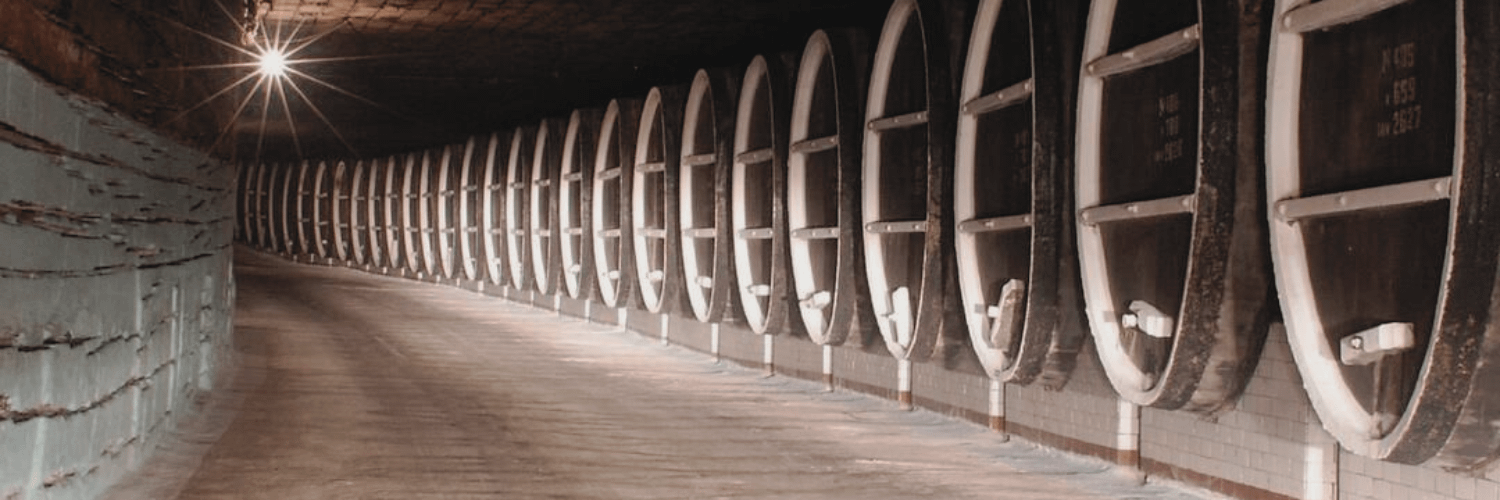
Moldova is one of 2026's most discussed travel revelations, and the case for it begins underground. Mileștii Mici, south of Chișinău, holds the Guinness record for the largest wine collection in the world. Its cellars stretch roughly 200 kilometers. Cricova, another famous cellar complex nearby, has tunnels you tour by electric cart. The scale is hard to fathom until you're inside.
Moldovan wine itself is undergoing a quiet renaissance. Younger producers are pushing indigenous grapes like Fetească Neagră, Fetească Albă, and Rara Neagră into more serious bottlings. Prices at the cellar door remain dramatically lower than in Western Europe. The country still receives few wine tourists relative to its quality. The welcome is warm, and the access is unrestricted in a way it simply isn't anywhere on the classic map.
Best for: travelers drawn to the historical and slightly improbable.
Wineries in Moldova you can book online.
3. The Greek islands and the Aegean: volcanic wine, ancient grapes

The Aegean is having a moment, and the wines deserve it. Santorini's Assyrtiko, grown on black volcanic soils in low basket-trained vines, makes one of the most distinctive white wines in the world. It's taut, mineral, capable of aging for decades. Naoussa, on the Greek mainland in the north, makes serious reds from Xinomavro, a grape often compared to Nebbiolo for its structure, tannin, and savoriness. Crete is reviving ancient grapes like Vidiano and Liatiko that disappeared from wider attention for most of the 20th century.
The visiting experience pairs naturally with the obvious appeal of Greece itself: small estates, food that takes wine seriously, dramatic landscapes. A few days on Santorini structured around its wineries — Sigalas, Hatzidakis, Argyros — is a different kind of trip from the cruise-ship version of the island, and a better one. Book your experiences online at WineTourism.com
Best for: travelers who want their wine trip to include a swim.
4. Why is southern Italian wine getting serious attention?

The serious wines of southern Italy — Etna in Sicily, Aglianico in Campania and Basilicata, Primitivo in Puglia — have been excellent for years and are only now arriving in wider consciousness. Mount Etna in particular has emerged as one of the most exciting wine regions in Europe. High-altitude vineyards on the volcano's slopes produce Nerello Mascalese reds with the elegance of Burgundy and a savor that is unmistakably volcanic. Producers like Passopisciaro, Graci, and Tenuta delle Terre Nere export globally now. The visits remain unhurried, and the wines cost a fraction of comparable-quality Barolo or Brunello.
Puglia offers sun-baked landscapes, masserie (working fortified farmhouses turned into stays), and Primitivo of real depth. Campania offers Aglianico — one of Italy's great long-aging reds — and a food culture that holds its own against anywhere in the country.
Best for: travelers who already love Italy and want a side of it that hasn't been packaged for them.
5. Portugal's interior: beyond the Douro

The Douro has fairly become Portugal's headline wine destination, with its terraced vineyards above the river. The country's interior holds two regions wine travelers haven't yet caught up to.
Dão, in north-central Portugal, makes elegant, structured reds from Touriga Nacional and Jaen, grown on granite soils at altitude. The wines have been compared to fine Burgundy for their restraint. The region is dense with small producers willing to show you what they're doing in unhurried detail.
Alentejo, sprawling south of Lisbon, is Portugal's hot, open south — cork forests, whitewashed villages, and a still-living tradition of fermenting wine in massive clay talhas, the Portuguese cousin of Georgia's qvevri. The amphora wines of Alentejo have a quiet cult following and are worth structuring a trip around.
Best for: travelers who already like Portugal and are ready for the parts that haven't yet been written up extensively.
Discover different wine regions of Portugal and book wineries online.
Which other emerging wine regions are worth watching?
Three places aren't yet trip-anchors for most wine travelers. But they represent the genuine future edge of wine tourism — places where investment, rising domestic markets, or climate change is creating wine cultures that weren't possible a decade ago.
Ningxia, in northern China, is being built explicitly as the country's answer to Bordeaux. Dozens of new wineries have opened with visitor facilities in recent years, supported by significant government backing. The wines are now winning international medals. A wine-specific trip is still ambitious. For now, Ningxia is best as a side trip from a broader China itinerary.
Nashik Valley, India — sometimes called India's wine capital — has grown around Sula Vineyards and a small constellation of producers serving the country's rapidly expanding middle class. The wines are improving year over year. Worth knowing about. Not yet worth flying across the world for unless you're already going.
Scandinavia is producing wine at the climatic edge of possibility — in Denmark, southern Sweden, and even parts of Norway. The trip is the curiosity more than the bottle. File it under "interesting that this is now real," and watch the next decade.
What you actually get that you don't get in Tuscany
The shift isn't just about price, though prices are usually half what they are in the classic regions. It's about the experience itself.
You spend more time with the people who make the wine, because they have more time. Your tasting isn't a slot in a calendar. Lunch tends to be longer and less formal. The food at the table is from the same village. Many estates will let you walk the vineyard alone. At harvest, you're more likely to be folded into the actual work than offered a token "experience" of it.
The wines are also doing things the famous regions aren't — qvevri fermentation, talha amphorae, indigenous grapes most American sommeliers haven't memorized yet, volcanic soils, old vines that were never replaced because no one was paying attention for fifty years. Drinking them is its own kind of education.
How do you plan a trip to an emerging wine region?
Timing matters most for harvest. It falls roughly late August through October across most of these regions — earlier in the Greek islands, later in the Portuguese interior. For quieter conditions and easier conversations with winemakers, late spring (May and June) is often the better choice.
Ground transport is the limiting factor. Georgia, Moldova, and the Greek islands are best done with a driver or guide — both for the language and for the practicality of leaving tastings without watching the wine. Southern Italy, Portugal's interior, and Etna are doable by car if you're comfortable on small roads.
Book directly with estates when you can, or through platforms like WineTourism.com, which handles bookings at wineries across Italy, Portugal, Greece, Georgia and other emerging regions with secure payment and free cancellation. For Georgia and Moldova specifically, a local guide is worth the cost. They unlock cellars and conversations that aren't on the public-facing schedule.
Bring more cash than you would in Tuscany. Some estates won't take cards, and you'll want to buy bottles.
A sample week in Kakheti, Georgia. As a concrete example: fly into Tbilisi, spend a day acclimating in the old town, then arrange a driver-guide for four days in Kakheti. Anchor in Telavi or Sighnaghi (the latter is the postcard hilltop town with views over the Alazani Valley). Build days around three wineries — one larger established producer like Schuchmann or Tbilvino for context, one small qvevri-focused family operation, and one natural-wine producer experimenting with indigenous varieties. Take lunches at the wineries themselves. One evening, reserve a supra dinner in a village home, which most local guides can arrange directly. Budget around €120–€180 per person per day all-in — less than half a comparable week in Tuscany.
Why this is the natural next trip
For travelers who already love wine, the move toward these regions isn't trend-chasing. It's the same impulse that led to the first trip to Chianti or Bordeaux, just pointed somewhere new. The wine is genuinely worth the trip. The hospitality is, by every honest account, warmer than what you find in saturated regions. And there's a particular pleasure in being early to a place that's about to be widely understood. The winemakers still have time for the conversation. The wines aren't yet on the lists at home.
The map is being redrawn either way. You can wait until it's settled. Or you can go now — while a Saperavi tasting in Kakheti still costs less than a glass of supermarket Chianti, and while the winemaker in Naoussa still answers his own door.


