Cabernet Sauvignon
Andrii Savchenko
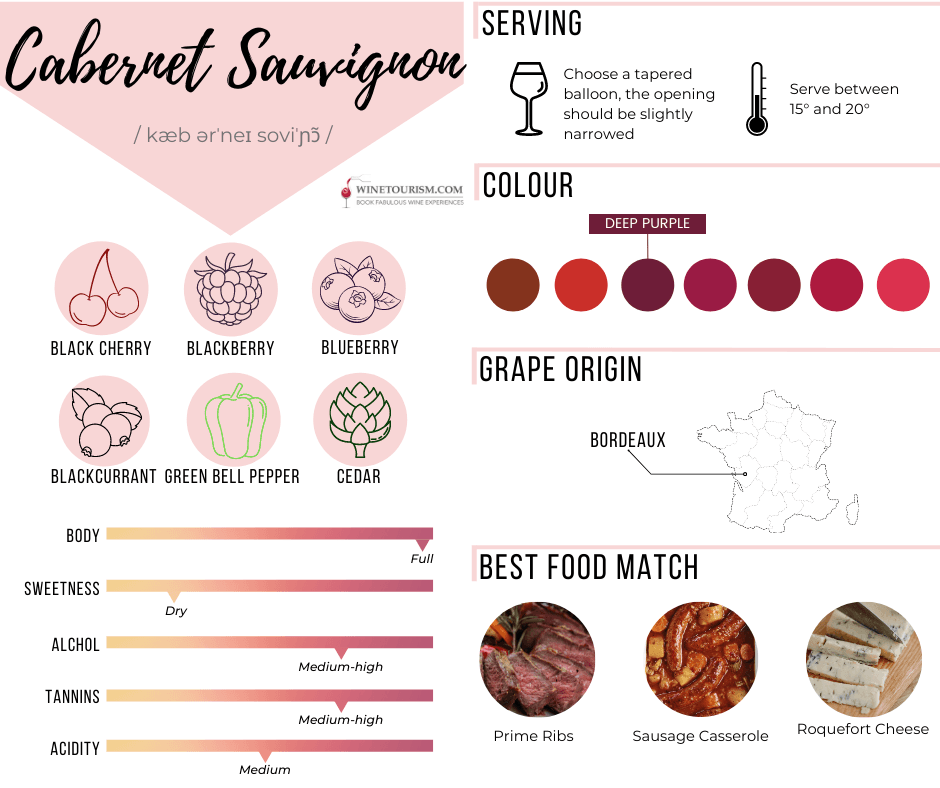
Cabernet Sauvignon is said to be the most planted grape in the world until 1990. Cabernet Sauvignon is typically described as a full-bodied wine, rich in tannins and with a noticeable acidity. This makes it an excellent wine to age as it brings new flavors when paired with oak.
Where is Cabernet Sauvignon from?
Originally from Bordeaux (France) and spread accross the rest of the world (including Canada, Australia, and Chile, to name just a few notable regions), Cabernet Sauvignon is also known as the "colonizing grape" as it spreads well regardless of local soil variations. It has become a symbol of the Napa Valley (California, US) and is now one of the most popular red wine grapes in the world.
Interesting story about Cabernet Sauvignon
Historians claim that Cabernet Sauvignon originates from an accidental cross-pollination of Sauvignon Blanc and Cabernet Franc in the 17th century in south-western France. Following the research onto this, the theory was verified in 1996 by scientists from the University of California, Davis.
Cabernet Sauvignon grape characteristics
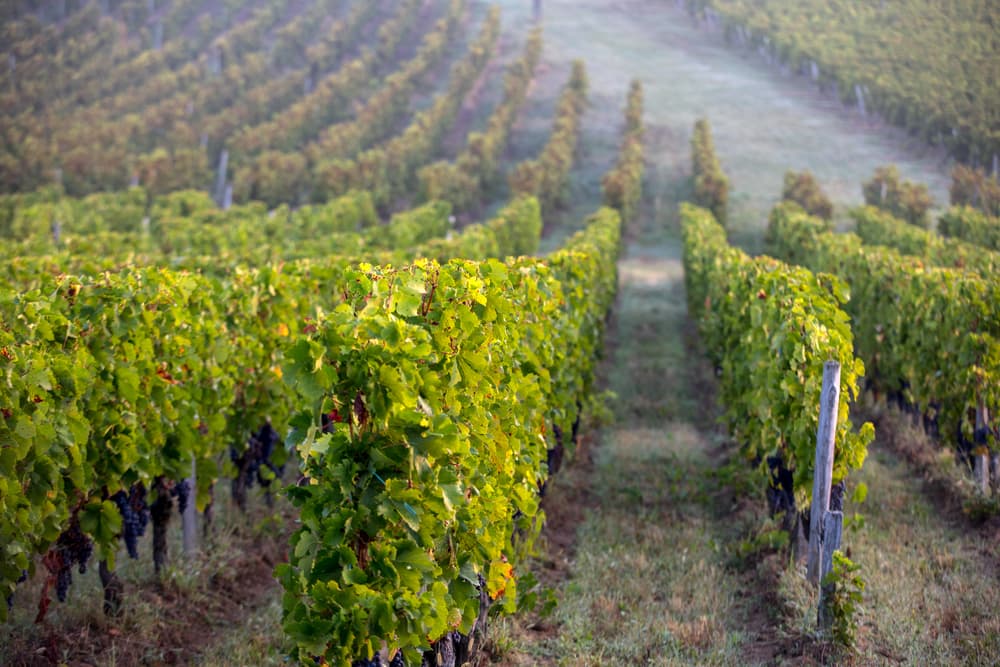
Cabernet Sauvignon generally has a fine body and an intense color that retain a unique character of the wine. Most Cabernet Sauvignon wines are fruity, mineral, or even smoky, depending on where the grape comes from. Bordeaux with its gravelly soils delivers harvests with great yields. Cabernet Sauvignon is a small grape that is easy to grow. Due to its adaptability, it can grow in a wide range of climates and in almost all wine-producing regions of the world.
Cabernet Sauvignon Wines
Cabernet Sauvignon is strongly associated with wines produced in the Bordeaux region, where it is often blended with Merlot and Cabernet Franc. Cabernet Sauvignon can also be blended with Malbec, Petit Verdot, and Syrah. It goes along well with a variety of 'partners' when it comes to blending, with Tempranillo being among the latest ones.
What to pair with Cabernet Sauvignon?
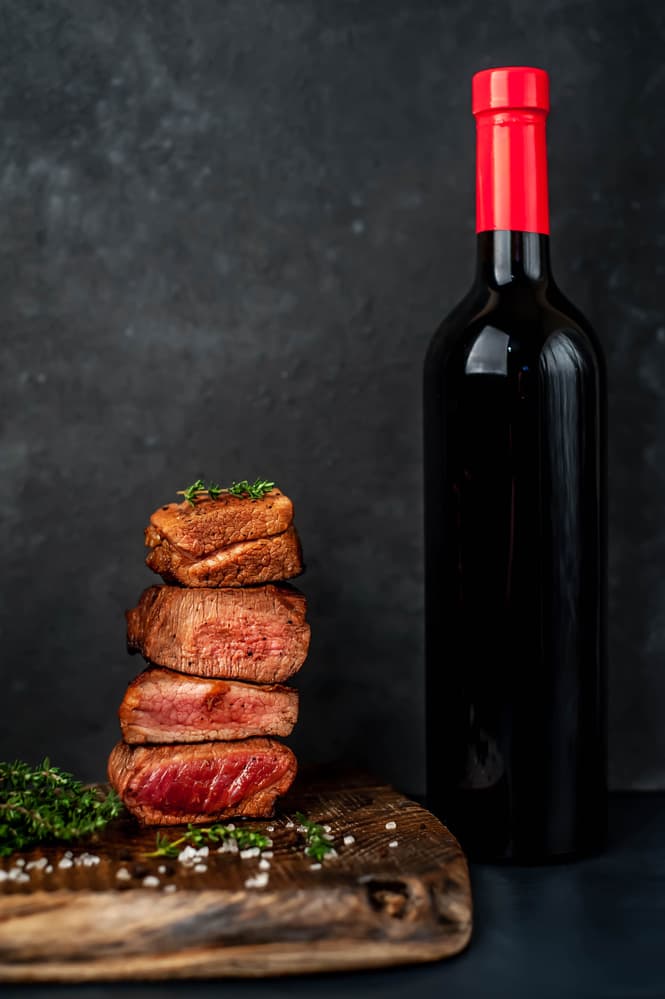
The high level of the rough tannins perfectly combines with grilled meat and dishes with a strong flavors.
Aged Cabernet Sauvignon goes really well with red meat such as steak or entrecote. Young Cabernet Sauvignon can be complemented with pork, sausage or beef. Some Cabernet Sauvignongs wines are more powerful, others finer and more elegant in terms of texture and taste - that's the reason why it could be paired with a variety of dishes.
Where to find the best Cabernet Sauvignon wines
61f3d89b62dca.png&w=1080&q=75)
Bordeaux
Here are some wineries in Bordeaux where you can taste the best Cabernet Sauvignon wines:
California
Here are some wineries in California where you can taste the best Cabernet Sauvignon wines:

Australia
Here are some wineries in Australia where you can taste the best Cabernet Sauvignon wines:

Frequently Asked Questions about Cabernet Sauvignon
Cabernet Saubignon is known to be highly vigorous and relatively easy to grow. It is one of the most disease-resistant grape varietals, however it is also known for excessive vegetative growth. Usually, it rippens later than other red grape varietals. It grows nearly everywhere as it is quite adaptable to any climate. But on average, it is harvested in late September.
Cabernet Sauvignon belongs to Vitis Vinifera species - type of grapes used for producing wines. Usually, you don't find such grapes in the supermarket as they are valued for different characteristics (high alcohol potential and balanced acidity).
Cabernet Sauvignon wine is usually defined as grape varietal wine since table (or bulk) wine usually doesn't mention grape varietals on its label.
Cabernet Sauvignon grapes are edible. However, they might taste differently from ordinary table grapes as they have more seeds, thicker skins and they are much sweeter (high concentration of sugar is later converted into alcohol).
Cabernet Sauvignon grape is a hybrid of 2 other well-known grape varietals - white Sauvignon Blanc and red Cabernet Franc.
Cabernet Sauvignon is a red wine known for its bold and full-bodied character. It is typically rich in flavors of blackcurrant, black cherry, and cedar, with firm tannins and a long finish. Cabernet Sauvignon is one of the most widely recognized and planted grape varieties in the world, producing exceptional wines that can age well.
Sauvignon refers to the grape variety Sauvignon Blanc, which is a white wine known for its crisp acidity and vibrant flavors of citrus, tropical fruits, and herbs. On the other hand, Cabernet Sauvignon is a red wine made from the grape variety of the same name, known for its bold and full-bodied character with flavors of blackcurrant, black cherry, and cedar. While they share a common grape variety, they produce wines with distinct characteristics and flavors.
Cabernet Sauvignon is generally best served at a slightly cooler than room temperature, around 60-65°F (15-18°C). This allows the wine to showcase its full range of flavors and aromas without being overly warm or chilled. Serving it too cold can mask some of its complexities, while serving it too warm can accentuate the alcohol and diminish the fruit flavors.
Cabernet Sauvignon can be enjoyed by wine enthusiasts at all levels of experience, including beginners. It is a popular and widely available red wine known for its bold flavors and versatility in food pairings. While it may have some complexity and tannins, it can still be approachable and enjoyed by those new to wine appreciation.
The choice between Pinot Noir and Cabernet Sauvignon depends on personal preference, as they have distinct characteristics. Pinot Noir is known for its elegance and lighter body, while Cabernet Sauvignon offers boldness and richness.
Merlot and Cabernet Sauvignon have different characteristics, and the preference between them is subjective. Merlot is known for its softer tannins and approachability, while Cabernet Sauvignon offers boldness and structure.
To determine a good Cabernet Sauvignon, look for a wine that exhibits balance, complexity, and depth. A good Cabernet Sauvignon will showcase a harmonious integration of fruit, tannins, and acidity. It should have a long, persistent finish, with flavors of dark fruits, cassis, herbs, and subtle oak influences.

Written by